A geothermal pilot project by Darcy Solutions at Macalester residence hall could illuminate a new way to heat and cool in cities.
https://www.startribune.com/minnesota-college-campuses-lead-the-way-on-geothermal-innovation/601828798


A new residence hall scheduled to open in August 2027 at Macalester College will change the face of the St. Paul college’s campus. The five-story building on the corner of Grand Avenue and Macalester Street will include beds for 224 students, a public plaza and a welcome center.
“That’s going to create sort of this arrival point, the Instagram moment, the front door for Macalester College,” said Nathan Lief, associate vice president of facilities.
Macalester’s new front door also will aid in the college’s effort to decarbonize its campus by 2050. It will be the first building on campus that will use geothermal heating and cooling.
“This is the biggest single step in Macalester’s long-term transition off natural gas toward decarbonizing our campus,” said Erika Schwichtenberg, director of foundation, government, corporate relations and sponsored programs at Macalester.
The project will add the private liberal arts college to a growing list of universities adopting geothermal energy. Macalester is using an innovative approach developed at another Twin Cities school to make geothermal power work in dense urban environments, where space and infrastructure have long limited its reach.
Darcy Solutions, a University of Minnesota startup company, manages the Macalester project. About 2010, scientists at the university developed a geothermal technology that was more than 100 times more productive than previous options, according to Robert Ed, director of marketing and strategy at Darcy Solutions. The company completed its first project using the new technology in 2020.
A traditional ground-source heat pump uses thermal energy from soil to heat a building in the winter or cool it in the summer. The Darcy system uses deep wells to access groundwater that remains a consistent temperature, about 52 degrees, year-round. A heat exchanger can bring thermal energy from underground water to buildings for heating or cooling.
To heat and cool a large office building, a traditional ground-source heat pump would require digging about 100 holes, requiring approximately 20,000-25,000 square feet of land. The Darcy system can reach the same capacity with just one deep well. At Macalester, Darcy Solutions will install four 400-foot-deep wells, which only take up about two square feet of space above ground.
Although upfront costs of geothermal energy systems are high, thermal energy is cheaper than fossil fuels in the long run, said Eric Fowler, director of building performance at Fresh Energy, a Minnesota-based nonprofit striving for clean energy in the Midwest. Geothermal systems reduce costs by cutting down on natural gas usage, which is subject to a volatile market.
The college estimates that it will save $71,000 a year in energy bills for the building by using thermal energy instead of natural gas, Schwichtenberg said.
After Macalester finishes construction of the residence hall, the next step will be to expand the geothermal energy system to serve all Macalester buildings north of Grand Avenue, Schwichtenberg said. A geothermal system that serves multiple buildings, known as a thermal energy network, can transfer heat between buildings. One building’s waste heat, which would ordinarily be released into the environment, can be sent to another building in the network.
Fowler said while geothermal heat-pumps for individual homes or buildings might not have the power to replace natural gas, thermal energy networks have more potential.
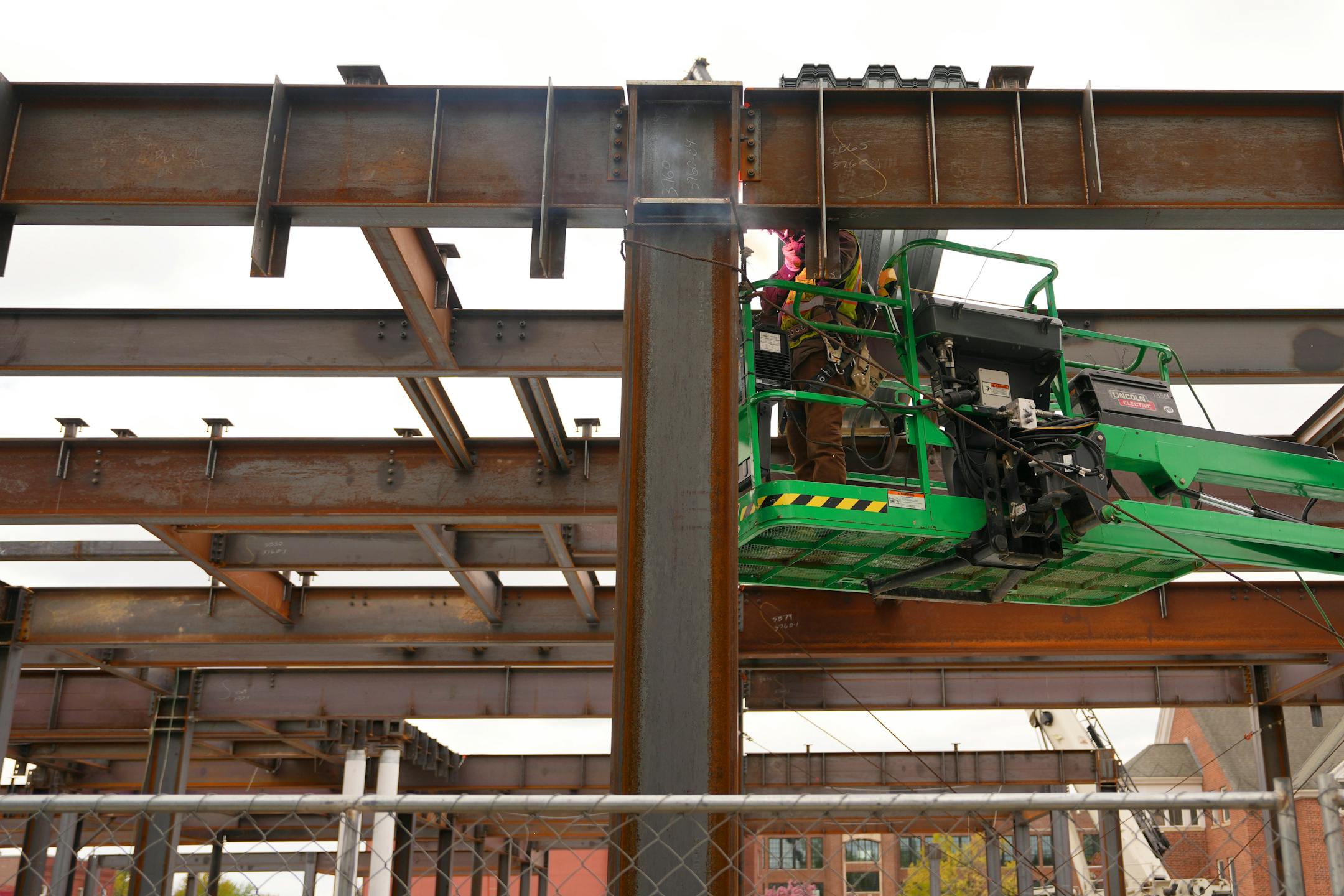
Other colleges and universities, such as Princeton University, Cornell and Carleton College, heat their campuses with thermal energy networks. Rob Hanson, manager of campus energy at Carleton, said it is easier to incorporate thermal energy networks on campuses than in other locations where individual buildings are privately owned.
Carleton was the first college campus in Minnesota to switch to geothermal heating and cooling. Since 2020, 75% of the campus has been connected to a geothermal district energy grid. The campus still burns natural gas when temperatures dip below about 20 degrees, but their natural gas use has decreased by about 70%, according to Hanson.
Instead of the Darcy method, which was not yet available when Carleton began its project, the campus used a geothermal exchange system that pumps water through a system of underground pipes. Carleton’s geothermal system required digging 95 horizontal trenches, which are 510 feet long and 15-30 feet deep, and 211 vertical holes, which are 520 feet deep. After digging, the school installed loops of pipes, which use water to carry energy from the soil to buildings.
While a geothermal system like Carleton’s would not be impossible in an urban setting like Macalester, the costs to install traditional geothermal systems on limited land masses may be prohibitive, Ed said. Carleton, in Northfield, sits on about 1,000 acres of land while Macalester covers only about 60 acres. The Darcy system makes geothermal energy more accessible in tighter urban settings.
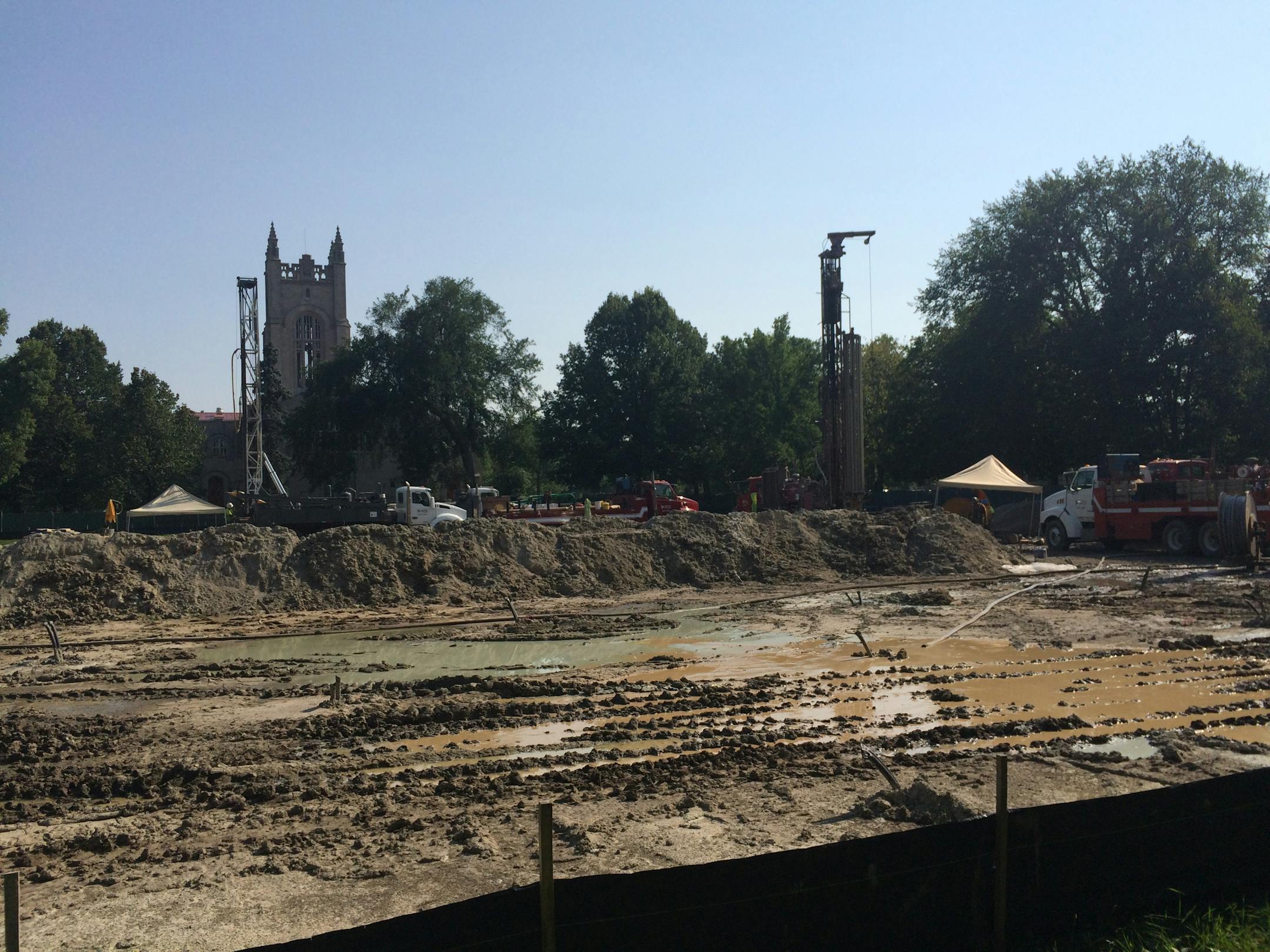
Carleton installed Darcy wells in August to heat four residential buildings that were not connected to the geothermal grid. The college plans to continue expanding its geothermal system by updating buildings to interact better with the geothermal system and incorporating any new buildings to the grid.
Outside of these two liberal arts colleges, geothermal energy systems are gaining traction in Minnesota. Between 7,600 and 18,000 residential housing units and 4,500 to 6,000 commercial buildings were heated with ground source heat pumps in 2025 in Minnesota, according to a U.S. Department of Energy market report.
In 2022, Darcy Solutions had completed fewer than 10 projects. The company now has 65 projects completed or in the works across the country and is evaluating 1,350 potential projects, according to Ed.
Some utility companies are on board with geothermal energy. CenterPoint Energy is evaluating locations for a company-owned 500-ton thermal energy network, which will be completed in 2028 or 2029.
“We’re really excited to be one of the first to make these investments and share what we learn with folks across the country to hopefully advance this technology and keep these efforts moving forward,” said Trey Harsch, manager of regulatory affairs at CenterPoint Energy.
The entire project will cost Macalester about $88 million, and the school already has invested $7.1 million, according to Schwichtenberg.
A bill by Sen. Bobby Joe Champion, DFL-Minneapolis, in the Minnesota Legislature would give Macalester $2.75 million from the state’s Renewable Development Account. That account is fueled by fees Xcel Energy pays for storing nuclear waste at its Prairie Island and Monticello Plants.
Schwichtenberg said Macalester will finish its project whether or not the state provides funds, but they would have to close the gap through private donations that could otherwise support student-focused needs like financial aid.
A similar bill for Macalester did not pass last year. The Minnesota Legislature did not pass any energy policy bills last year in a divided House and Senate.
Sen. Nick Frentz, DFL-North Mankato, chair of the energy, utilities, environment and climate committee, said bills to fund geothermal energy projects have better prospects this year because legislators on both sides are beginning to understand the technology and are curious about it. The session is scheduled to end Monday, May 18.
Sen. Jason Rarick, R-Pine City, an electrician, built a geothermal heat pump system for his family farm from scratch last fall. Rarick said he is interested in supporting projects that request the proper amount of funding and can provide insight into the future of geothermal heating.
Several other geothermal projects are seeking funds at the legislature, including a thermal energy network at The Heights housing development in St. Paul and the Como Zoo.
The state legislature gave the Department of Commerce $1.08 million last year to offer planning grants to eight cities and counties that are interested in adopting geothermal systems on public buildings. The department received about twice as many applications than they were able to fund, according to Pete Wyckoff, deputy commissioner of energy resources. Another bill this year would appropriate more money from the Renewable Development Account to complete more feasibility studies.
The Renewable Development Account is not the only way for organizations to receive funding for their geothermal projects. Federal tax credits also can help alleviate upfront costs.
While the Trump administration made steep cuts to solar and wind tax credits, developers have more opportunities to redeem federal tax credits to fund geothermal heating and cooling projects.
Companies can secure tax credits that cover 30% to 50% of total project costs for geothermal heating and cooling if they begin construction by 2032, while solar and wind projects must begin construction by July 2026. Geothermal projects can receive a credit for a smaller percentage of total costs if they begin construction by 2033 or 2034 and face simpler compliance pathways, such as fewer regulations on where to source materials.
Jeremy Kalin, a clean energy tax credit lawyer at Avisen Legal, said while clean energy advocates have been very vocal about solar and wind, no one talked much about geothermal heating and cooling. This, he said, may have helped save the tax credit program supporting it.
“Geothermal ground source heating and cooling was just sort of this odd duck in the corner,” Kalin said. “It didn’t have a very vocal constituency. There was no obvious reason to attack it, and so it just sort of sat there.”